
Lessons from Rural Jordan on Social Entrepreneurship
This article explores how deep field immersion and listening to local experts are the only real ways to build social innovations that actually work.
Introduction: Building a Bridge or Just an App?
Have you ever tried to solve a puzzle without having the original picture on the box? This is exactly what most entrepreneurs do when they start developing a “platform” or an “app” for a social problem without ever stepping foot into the real world.
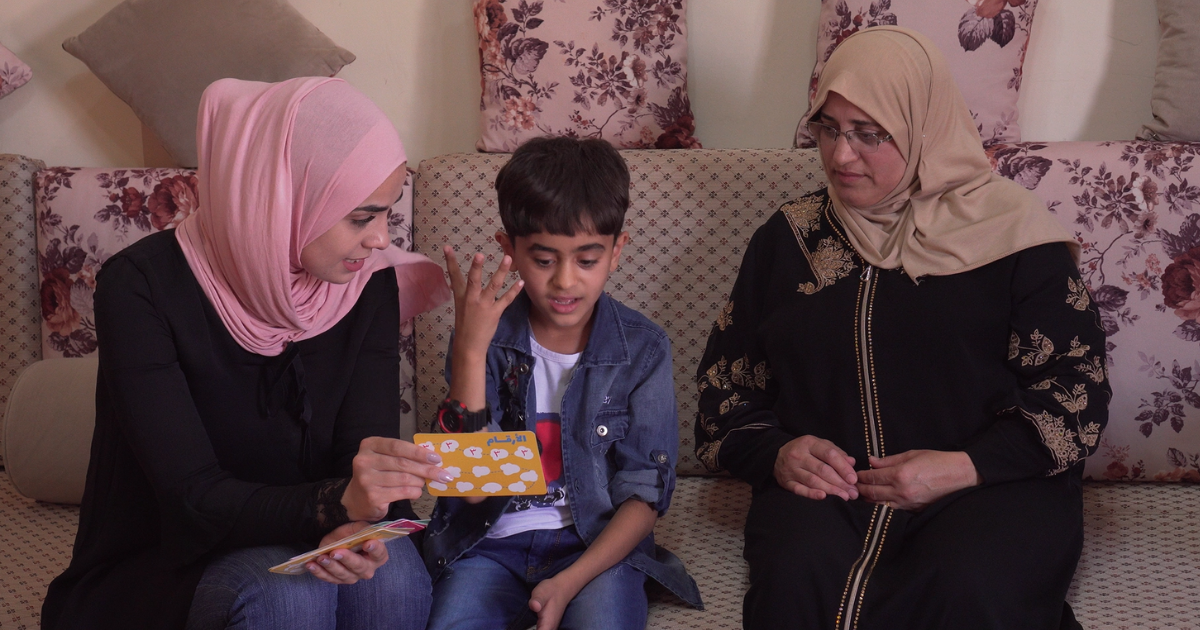
It is easy to sit in a comfortable office in a big city and imagine that the problem is simply a “lack of technology.” But when we traveled to Salt and Deir Alla to understand the reality of education for deaf children for our project, Martha EDU, we discovered that the problem was much deeper than just a “touch screen.”
My Experience: Going to the “Ghor” to Raise the Bar
When the idea for Martha EDU first started, our ambition was purely technical. We thought we knew what was needed. However, the moment we met specialists like Yousef Al-Jadawi and Ikhlas in Deir Alla, and Samir Badaniyeh in Salt, our office-born assumptions shattered against the rock of reality.
Imagine sitting with a specialist in Deir Alla only to realize that the primary barrier isn’t even educational—it’s a “culture of shame.” Some families hide their deaf children for fear of social stigma. This results in children reaching the age of ten without even a basic sign language to communicate with their own parents. We realized then that our solution had to be a “bridge” to break this isolation inside the home first.
Clear Examples: The Field Corrects the Path
Field research provided us with truths that no traditional “market study” could ever find:
- The Smallest Financial Hurdle: We discovered that a simple amount like $7 (5 JOD) for transportation or the price of hearing aid batteries could stop a child from learning for months. True social innovation must account for these daily operational costs, not just the price of the software.
- The “Automatic Passing” Trap: Samir Badaniyeh told us about students reaching the 10th grade while being functionally illiterate due to an automatic promotion system that ignores their specific needs. This forced us to pivot Martha EDU into a solid foundational tool, rather than just a supplementary aid.
- Visuals Over Text: Sign language is not enough; the deaf child is a visual being. Experts emphasized that “hands-on” learning (like drawing maps or science experiments) sticks in their minds much better than dry reading and writing.
What I Learned: The Heart of Social Entrepreneurship
Social entrepreneurship isn’t just “business with a smile”; it’s the science of listening. Here is what this journey taught me:
- Mix Facts with Feelings: I felt a heavy responsibility when I saw a specialist’s eyes well up while talking about a brilliant student who was denied integration into a public school because the staff wasn’t ready. Those “emotions” are what turn code into a human mission.
- The Local Expert is the Compass: Yousef, Ikhlas, and Samir are not just names in a report—they are the solution’s GPS. Innovation is taking their 28 years of experience and putting it into a modern technical mold.
- Technology is a Servant, Not a Master: Don’t force tech on people. Ask them how it can fit into their exhausting “daily routine.”
Practical Advice for New Social Entrepreneurs
If you’re thinking about starting a community project, don’t start with the code. Start with this:
- Leave your office immediately: Go to the furthest village possible. That is where you will find the truth.
- Ask “Why?” five times: Why aren’t they learning? Because they don’t go to the center. Why? Because transport is expensive. Why? Keep going until you hit the root.
- Build a “Human Prototype”: Test your idea manually with 5 children before you program a single line. As the experts in Salt suggested, test on a small group and measure the impact (Pre & Post testing).
Conclusion: The Solution Starts “There”
In the end, Martha EDU is no longer just an app for learning sign language. It has become a “voice” for children in Salt and Deir Alla who told us, through field experts, that they need people who understand them, not people who pity them.
My final advice to you: If you want to change the world, start by changing where you sit. Get into the field, listen, learn, and then innovate. Real innovation isn’t a “genius idea”—it is a deep understanding of human struggle.
Are you ready to head to the field today?